
Previously, we have written about the benefits of taking a proactive and programmatic approach to M&A. A systematic, metric-oriented program to acquire consistently throughout economic cycles has been shown to outperform big bang transactions and sporadic acquisitions (see McKinsey’s two decades of research).
With these benefits in mind, how does one begin taking a programmatic approach to M&A? We believe a great way to start is to develop your own M&A playbook. This means setting up a system, processes, and a specialized buy-side M&A team.
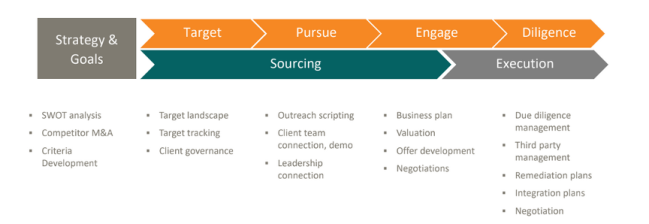
When thinking about what an effective M&A playbook could look like for your organization, the following graphic can serve as a helpful visual guide. We expand on a few key components of this graphic below, and offer practical, actionable ideas to assist in developing an M&A playbook.
Effective M&A
Playbook Design
Strategy & Goals
Defining your strategy and goals is a foundational step to creating a clearly defined, programmatic approach to M&A. To help guide your goals, it can be helpful to first create a consolidated SWOT analysis based on dialogues with key members of management. Afterwards, you can begin mapping the landscape with competitive analysis, and determining your own target criteria. These criteria are often fluid as conditions, interest and opportunities develop.
Target
With target criteria determined, it can be helpful to create a watchlist or acquisition tracker. This is a “living” acquisition list - assembled from conversations with management, acquisition criteria and market research - that tracks potential targets. Valuation and key multiples can also be tracked.
Pursue
Next, begin conversations early with high-priority targets. A carefully crafted outreach strategy utilizing a thoughtfully designed message that outlines the strategic rationale for your interest can help you stand out from the barrage of other inbounds your target receives. Introductory calls can help further screen for target fit and actionability. Persistence, follow-through, and playing the long game are other ways to stand out while pursuing targets. These are things everyone talks about, but few people truly do.
Engage
Leveraging conferences and implementing a digital content engagement strategy can systematically nurture relationships with targets as you play the long game. We recommend that organizations who aspire to be active and systematic with their acquisition programs deliberately cultivate a compelling M&A brand. Harness the power of your marketing and talent management teams to incorporate this perspective into your market-facing content. Most acquisition programs are at least partially driven by a desire to add talent to your team. Make sure that your message to the market is consistent with this approach (taking a page from your Recruiting brand).
Diligence
Efficiency is key if you want to be competitive in today’s M&A environment. The rigors of due diligence can be extremely taxing for targets. Being prepared and organized in advance can help ease the burden. Having a default due diligence request list is standard practice, but before sending your request list to a target, take some time to tailor it to the circumstances of the target’s business. Providing an organized due diligence work plan and timeline early in the post-LOI period can demonstrate your level of focus and provide your target with confidence that you are prepared to be efficient with your process – and foreshadows post-close life.
Decision Making Process
An effective decision-making process can be the difference between the success and failure of an acquisition program. This is an area where strategic acquirers are often at a disadvantage to the Private Equity competition. Each organization must develop the balance of efficiency and disciplined, thorough evaluation that can work within their organization, but it is important to recognize that you compete with PE firms who are 24/7 deal-makers and move quickly and decisively. When you embark on an acquisition program, it is worth the upfront investment to streamline your decision-making process – or risk losing before you even get started.
Integration Planning
Integration planning should begin well in advance of the transaction closing. Integration is always a challenge, and no two integrations will be the same, which is why the approach requires experience, vision and careful yet swift execution to be successful. Set a plan, accountabilities and determine early the key risks to manage. Invest in external and internal communication - no transaction ever failed for over-communicating. Involve key people up front so that they have insight across groups and a sense of ownership of synergy targets. It will ultimately be up to these leaders to resolve integration pain points, and help the company realize the merger value and bring the vision of the combined entities to life.
Team
Think of your mission here as though you are setting up a “Special Forces” unit. Decide in advance who will be involved in strategy, sourcing, diligence, decision-making and integration. To avoid delays, line up Subject Matter Experts (SMEs) – both internal and external - as soon as you have visibility to transaction timing. A trusted buy-side advisor can provide accountability and add skills and capacity as an extension of your team.
About Harbor View Advisors
Harbor View Advisors provides M&A advisory, turnkey corporate development, and strategic consulting to innovative companies. Our unique approach combines the strategic thinking of a consulting firm with the execution expertise of an investment bank to provide clients with the full spectrum of guidance they need to achieve their goals.
DISCLAIMER This presentation is intended for information and discussion purposes only and does not constitute legal or professional investment advice. Statements of fact and opinions expressed are those of the participants individually and, unless expressly stated to the contrary, are not the opinion or position of Harbor View Advisors, LLC (“HVA”). The information in this presentation was compiled from sources believed to be reliable for informational purposes only. HVA does not endorse or approve, and assumes no responsibility for, the content, accuracy or completeness of the information presented.

