
As an entrepreneur, how can you reframe the impact of innovative and disruptive technologies? Are they really an opportunity for your business rather than a threat? We recently posed these questions to business owners at the ISA – Association of Learning Providers’ annual business retreat. Like in many areas within Human Capital Management, learning and development players are experiencing a wave of disruption that is driving innovation within the industry. For example:
These challenges will only intensify as forces impacting human capital converge – including technology, demographics, and socio-economic drivers.
Last month, we had the pleasure of presenting at the ISA - Association of Learning Providers’ annual business retreat in Scottsdale, Arizona. This opportunity allowed us to connect with business leaders in corporate learning and talent development to discuss trends we are seeing. Our presentation centered on disruptive technologies, fueled by significant capital raised in recent years.
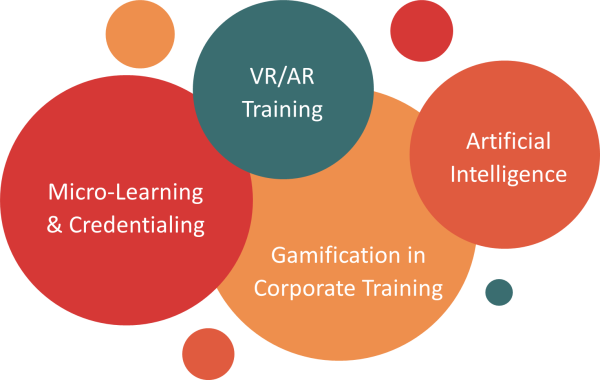
We highlighted four of the disruptions impacting Learning & Development:
The intertwined use of technology and scientifically-backed techniques will be pivotal in the evolution of the Learning and Development Industry. In order to stay competitive, companies will need to consider the four disruptors and how they can be applied to their business. However, full implementation of innovation does not happen overnight. While people are extremely excited for what products like Chat GPT could mean for the industry, it will take time to fully deliver on the value proposition. However, change is coming faster and faster, as an industry practitioner noted:
"This is like if the Industrial Revolution slammed into the dot-com era and made a baby traveling at a million miles an hour". –Todd Michem, CEO, AMP Learning & Development
As we concluded the presentation, we asked the audience to consider the impact of these disruptions on their businesses and the industry as a whole. The spur of innovation within learning and development is a double-edged sword. While there is an element of threat in terms of new, competitive solutions entering the market, there is also an immense opportunity. We expect those who capitalize on the disruption within L&D in the coming decade to be well positioned in this competitive and dynamic market.
DISCLAIMER This presentation is intended for information and discussion purposes only and does not constitute legal or professional investment advice. Statements of fact and opinions expressed are those of the participants individually and, unless expressly stated to the contrary, are not the opinion or position of Harbor View Advisors, LLC (“HVA”). The information in this presentation was compiled from sources believed to be reliable for informational purposes only. HVA does not endorse or approve, and assumes no responsibility for, the content, accuracy or completeness of the information presented.

